
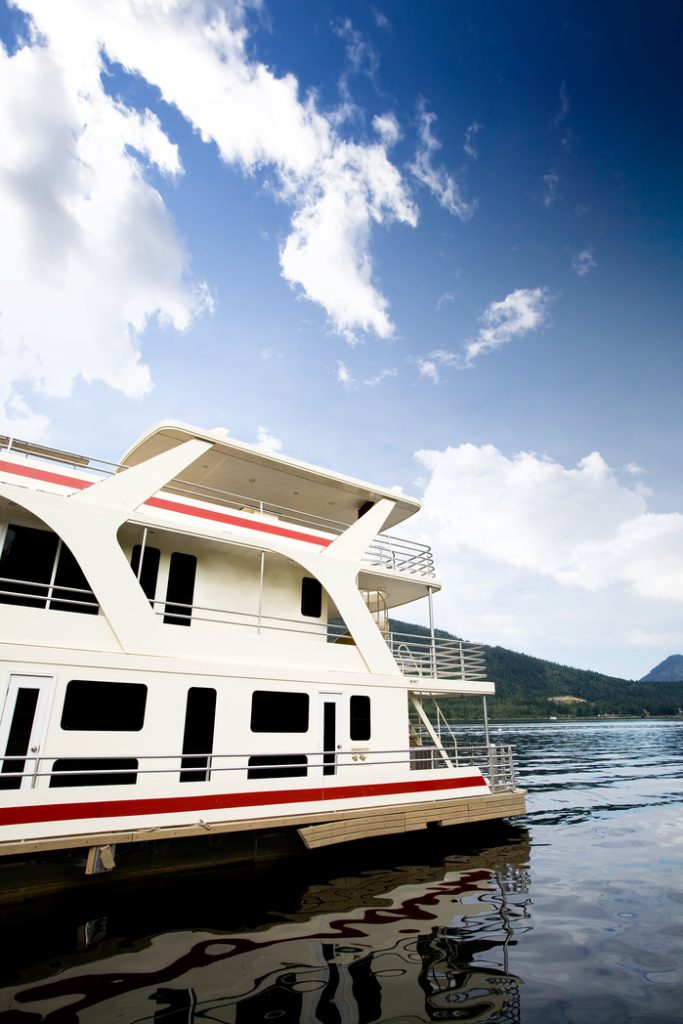
Houseboats are a common sight on Lake Travis. Vacationers, weekend warriors, and retirees alike enjoy a houseboat vacation, but for hundreds of people, houseboat living is their way of life all year long. They have chosen to give up the limitations of land for the adventure and tranquility of houseboat living on beautiful Lake Travis.
Have you dreamed of the houseboat lifestyle? Rather than jumping in headfirst, let’s take a closer look at the pros and cons of houseboat living to see if it’s right for you. As an authority on houseboat storage (We offer long-term storage at Northshore), we’ll talk about what it looks like to power, maintain, and store a houseboat for those seeking the on-water life.
Houseboat Life: The Basics
Houseboat living offers unparalleled freedom, but it also requires planning and responsibility. There are a few things to consider. First, houseboating involves living both on the water and in port — there will be times when you either can’t or don’t want to leave port.
On a houseboat, fresh water and fuel are as much of a necessity as food. It’s important to remember that not every marina will have these amenities, and some docks may not be big enough for your vessel. Plan ahead for supplies, and build a strong relationship with a local marina that has the amenities you need.
Keen awareness and respect for the four elements is also a must. Proper planning affords you the ability to access memorable areas and events unreachable by land. However, you don’t want to learn that your fire extinguisher doesn’t work when you’re twenty miles offshore in an unexpected thunderstorm.
Finally, a houseboat is both a home and a vehicle, so it requires insurance coverage. Whatever you do, don’t skimp on the coverage or make the mistake of thinking you don’t need it. While it may be an expense, it’s an invaluable asset – just like your car or homeowners’ insurance.
Houseboat Maintenance and Upkeep
Your houseboat will require both daily maintenance and routine servicing. Repair costs vary depending on your houseboat’s age and construction, as well as the type of repair needed.
Let’s walk through some of the main houseboat maintenance tasks that you will need to build into your routine:
Hull
The hull (or exterior) of your houseboat takes a beating, and it needs regular upkeep. Make sure that you regularly inspect your hull for leaks, cracks, blisters, and clean off any debris. Every two to three years, you should repaint your hull with anti-fouling paint to prevent corrosion. Northshore Marina’s services include an in-house professional detailing team, and they’ll gladly make your houseboat look brand-new.
Interior
The hull isn’t the only part of your boat that needs upkeep – living on a houseboat means unique humidity challenges for your indoor space, too. Prevent mold with ventilation, dehumidifiers, and regular cleaning.
Engine
Your houseboat’s engine needs regular maintenance so that you don’t find yourself unexpectedly stranded in the middle of the water. Make sure you check your fuel lines, filters, propellers, and shafts, as well as your battery voltage and recharge system. You should also change your houseboat engine oil every year, just like your car.
Plumbing and waste
Most houseboats have freshwater tanks, greywater systems, and sewage tanks to help maintain a healthy environment, and regularly cleaning and inspecting these systems is crucial. While it’s possible to get your own fresh water and pump out your own sewage, many marinas can assist with houseboat plumbing needs for a reasonable rate.
Electric
Houseboats run on a mix of shore power, battery, and renewable energy sources. To make sure your lights don’t go out miles from shore, it’s important to stay on top of your wiring, batteries, and generators.
Mooring equipment
Whether you’re anchoring in the open water or docking in a marina, you need to make sure that all your ropes, chains, shackles, winches, and anchors are in working order. Otherwise, your houseboat could drift off course!
Safety gear
Safety is extra important on a houseboat, as you may not always have easy access to emergency services. Ensure that you have all the necessary safety gear, including lifejackets, flares, and fire extinguishers.
Where Will I “Park”?: Wet Slip Boat Storage for Houseboats

Even if you plan to spend most of your time exploring Lake Travis on your houseboat, it will still need somewhere to dock from time-to-time, especially during extreme weather. That makes a wet slip essential for the houseboat lifestyle.
Most wet slip storage has a u-shaped design that offers extra protection for houseboats, and some marinas offer covered slips that shield you from the sun. Having a wet slip isn’t just a place to store your vessel – it also gives you access to a variety of important amenities like:
- Electricity
- Fresh water
- Pump-out service
- Trash service
- Boat maintenance professionals
- Fuel docks
- Ship stores
- Restrooms and showers
- Wi-Fi
- Events
When you’re looking for wet slip boat storage, think carefully about your needs. Your marina is your trusted partner in keeping your Lake Travis houseboat ship-shape, and they also give you access to the broader boating community.
If you’re only going to be in Lake Travis for a short period, you may be able to get a transient boat slip. Instead of signing a traditional lease, you can grab a spot for a shorter duration and move on when you’re ready for your next adventure.
Dock Your Houseboat on Lake Travis, Texas at Northshore Marina

Finding a reliable and well-maintained marina, fully staffed with a friendly and knowledgeable staff, is worth its weight in gold. Northshore Marina at the Hollows offers covered boat slips with amenities that are perfect for houseboats, including:
- In-slip electric
- On-site shower
- Pump out station
- Pump out barge
- Fresh water
- Trash service
- Fuel dock
- Ship store
- Wi-Fi
- Common area with TV and barbecue pit
We have slips ranging up to 80 feet, the largest on the lake, to accommodate houseboats of all sizes. We also have long-term leases and transient boat slip rentals, so there’s always an option to meet your houseboat lifestyle needs. And as the six-time winner of the Marina Association of Texas Marina of the Year Award, you’re guaranteed to have a first-rate experience with us.
Tenants are not allowed to live on their houseboats “long-term” while the boat is in storage. However, Northshore accommodates transient stays while we keep your floating home clean, safe, and protected.
Lake Travis is a gorgeous lake for a houseboat
Living on a houseboat is incredibly rewarding – it gives you a sense of freedom like nothing else. When you step out in the morning and the light mist rests atop the lake, the hard work you put into this life feels fully realized.
Frequently Asked Questions
Are houseboats high maintenance?
Houseboats are not necessarily high maintenance – especially compared to a house – but they do have unique upkeep challenges because you don’t have access to the same plumbing, sewage, and electric systems that you would have on land. Marinas can help you stay on top of houseboat maintenance with amenities like fresh water, pump-out services, and on-site electric.
Where can I find food, ice, and beverages for my houseboat?
The Northshore Marina ship store is known as the best location on Lake Travis to stop in for fuel, snacks, ice, apparel, and boater necessities. We even serve barbecue breakfast tacos from Smokey Mo’s through the spring and summer.
Where can I track Lake Travis water levels and conditions to ensure my houseboat stays safe?
The Northshore Marina “Weather and water levels” page offers up-to-date weather and wind conditions on Lake Travis. Water Data for Texas is also a fantastic site that daily tracks the water fluctuations. The U.S. Army Corp of Engineers also manages a highly specific and up-to-date “Lake Travis” page for water levels and flood events.


0 Comments